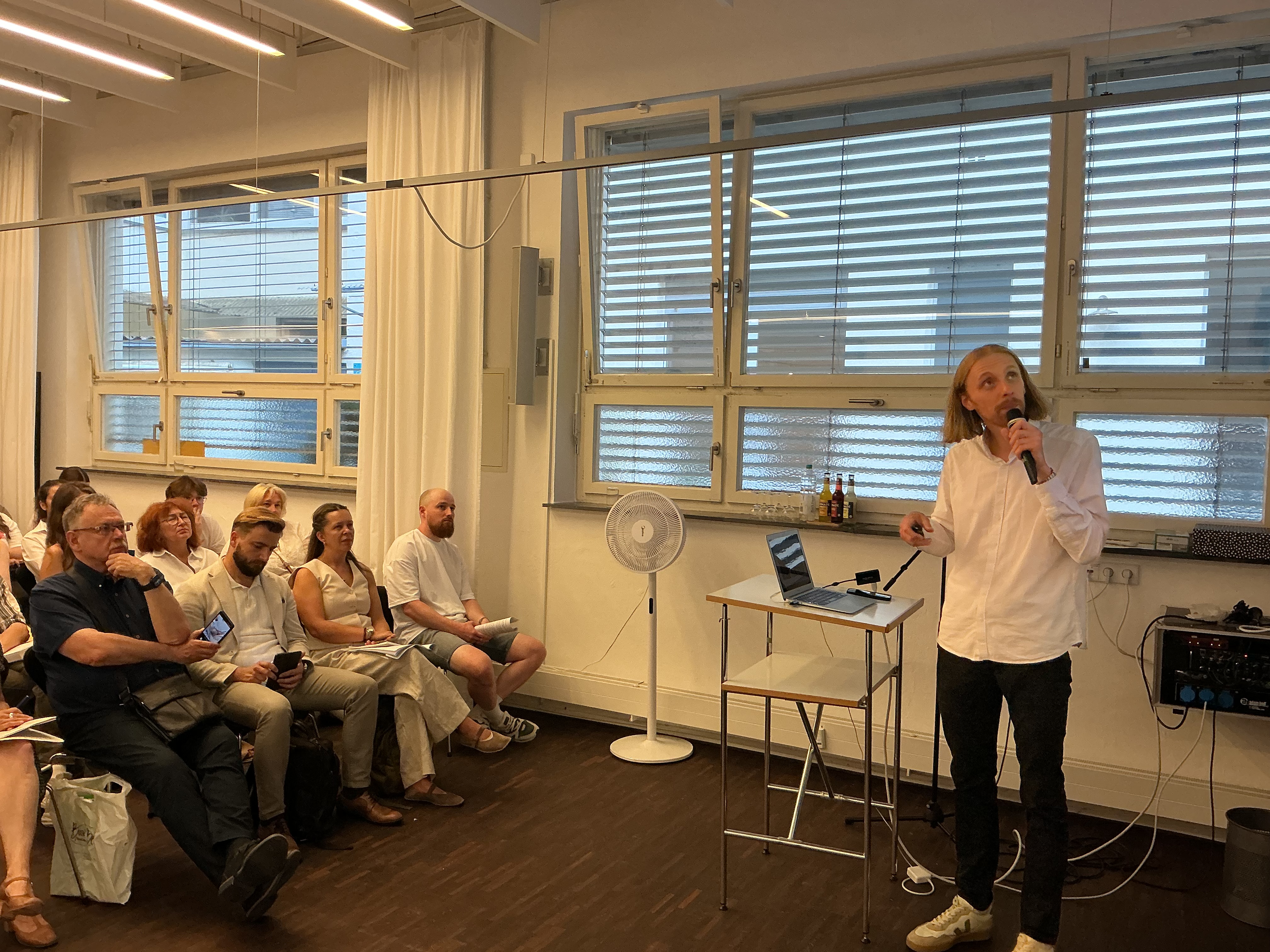
As part of the visit, KIT hosted a public lecture, "Housing Construction in Ukraine in Times of Multiple Crises," by Andrii Shtendera (Lviv), architect and urban planner. Shtendera outlined Ukraine's diverging demographic pressures, described as a "W-shape" pattern of growing western cities, sharply shrinking front-line regions such as Kherson (whose population has fallen from roughly 278,000 to 50,000–65,000 since 2022), and structurally shifting central areas, and the resulting trilemma facing reconstruction: balancing speed, quality, and sustainability under building regulations still oriented toward conventional concrete construction. He presented current housing strategies ranging from dormitory conversions in Dnipro to dignity-based housing for veterans and the elderly in Lviv and Kherson, while stressing the continued shortage of standardized legal frameworks and completed precedents to build on.
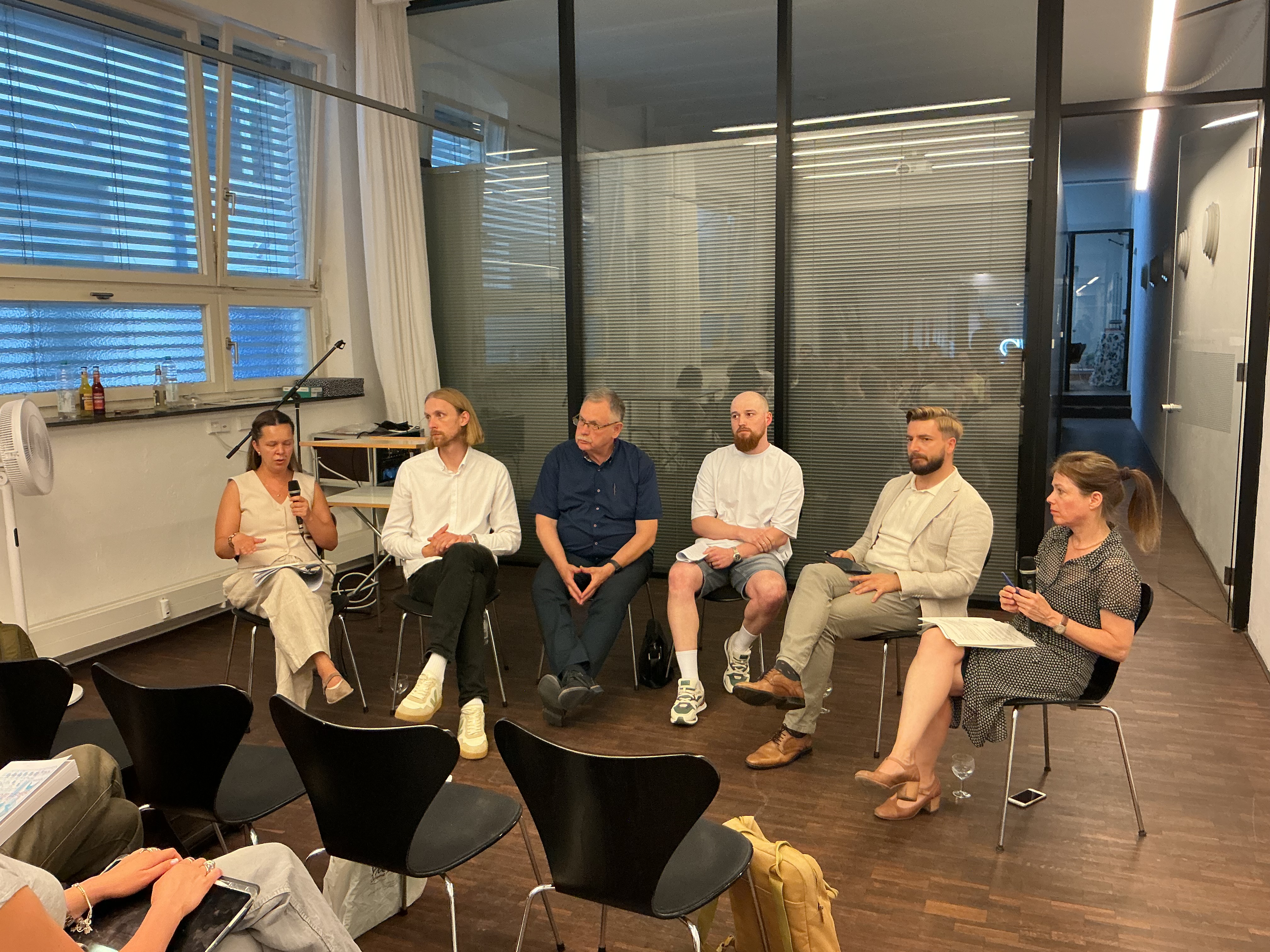
The lecture was followed by a panel discussion moderated by Prof. Dr. Barbara Engel, with Marina Kramarenko (Odesa), Ihor Nadkernychnyi (Vinnytsia), Prof. Dr. Bohdan Cherkes (Lviv), Haris Piplas (Zurich), and Andrii Shtendera. Kramarenko described Odesa's shift toward reinforcing existing structures and decentralized energy — including underground schools that double as civil-defense shelters — over large-scale expansion. Nadkernychnyi presented Vinnytsia's "Municipal Housing" model, which provides city land and infrastructure at reduced cost to meet a housing demand of 2.5 million square meters against a production capacity of only 100,000 square meters a year. Cherkes discussed Lviv's demographic growth toward the Sykhiv district and the contested identity of its Soviet-era housing stock and refugee settlements. Piplas warned against repeating the "Sarajevo error" of top-down, deregulated master planning disconnected from local practitioners, noting that international financing still favors technical infrastructure over housing. The panel closed on the pressure of Ukraine's real-estate market on affordability, and on the need to institutionalize communal solidarity, the tradition of ‘toloka’, as a lasting planning framework rather than a wartime improvisation.